noindex

The Law Office of Ryan P. Duffy, PLLC

Category: Construction Accidents

Workplace injuries, OSHA violations, and when you can file beyond workers’ comp in NC.

  • Workers’ Comp vs. Personal Injury Lawsuit After a Construction Accident in NC

    Workers’ Comp vs. Personal Injury Lawsuit After a Construction Accident in NC

    After a construction accident in North Carolina, you might be told that workers’ compensation is your only option. That’s not always true. Depending on who caused your injury, you could have a separate personal injury lawsuit against a third party — and that claim can be worth dramatically more than workers’ comp alone.

    I spent years as an insurance defense attorney handling claims for contractors and their insurers. I know the strategies companies use to limit what injured construction workers receive. At the Law Office of Ryan P. Duffy, I help workers in Belmont and across the Charlotte metro area understand both tracks of recovery and pursue the maximum compensation available to them.
    Construction site with workers on scaffolding and safety equipment visible

    Construction accident victims in NC may have both workers’ comp and personal injury claims available.

    Workers’ compensation: what it covers and what it doesn’t

    Workers’ compensation in North Carolina is a no-fault system. If you were injured on the job, you’re generally entitled to benefits regardless of who caused the accident. You don’t have to prove your employer was negligent. You don’t have to prove anyone was at fault.

    That sounds great until you see what workers’ comp actually pays:

    • Medical expenses — all reasonable and necessary medical treatment related to your work injury is covered, but your employer’s insurance carrier gets to choose or approve your treating physician
    • Temporary total disability — if you can’t work while recovering, you receive two-thirds of your average weekly wage, up to a maximum set by the state (which changes annually). That’s a 33 percent pay cut from day one.
    • Permanent partial disability — if you’re left with a permanent impairment, you receive compensation based on a rating system that assigns a number of weeks of benefits to each body part
    • Permanent total disability — for catastrophic injuries that prevent you from ever returning to any employment

    What workers’ comp does NOT cover:

    • Pain and suffering — there is no compensation for your physical pain, emotional distress, or diminished quality of life
    • Full lost wages — you only get two-thirds, and there’s a cap
    • Loss of consortium — your spouse has no separate claim for how your injury affects your relationship
    • Punitive damages — even if your employer’s conduct was reckless or intentional, workers’ comp doesn’t punish them for it

    The tradeoff is speed and certainty. Workers’ comp pays without litigation. But for serious construction injuries — falls, crush injuries, amputations, traumatic brain injuries — the workers’ comp benefits often fall far short of what you actually need.

    The employer immunity problem

    In exchange for providing workers’ comp coverage, employers get something valuable: immunity from personal injury lawsuits by their employees. Under North Carolina’s Workers’ Compensation Act, you generally cannot sue your own employer for negligence, even if their safety violations directly caused your injury.

    This is the “exclusive remedy” doctrine, and it’s one of the most frustrating aspects of construction accident cases. Your employer ignored OSHA regulations, didn’t provide fall protection, or failed to maintain equipment — and you still can’t sue them in civil court. Workers’ comp is your only remedy against your direct employer.

    But the exclusive remedy only applies to your employer. It doesn’t protect anyone else.

    Third-party personal injury claims: where the real money is

    Construction sites are complicated workplaces with multiple companies operating in the same space. Your employer may be immune from a lawsuit, but other parties at the site usually aren’t. When one of those third parties causes your injury, you have a personal injury claim that’s completely separate from workers’ comp.

    A third-party personal injury claim gives you access to damages that workers’ comp doesn’t cover:

    • Full lost wages — past and future, without the two-thirds cap
    • Pain and suffering — compensation for the physical pain and emotional toll of your injury
    • Loss of enjoyment of life — damages for the activities and experiences your injury has taken from you
    • Loss of consortium — your spouse’s separate claim for the impact on your relationship
    • Punitive damages — if the third party’s conduct was willful or reckless, the jury can award additional damages to punish them

    The catch: unlike workers’ comp, a personal injury claim requires you to prove fault. You have to show that the third party was negligent and that their negligence caused your injury. And in North Carolina, the defendant will argue contributory negligence — that you were partly at fault too — to try to bar your entire claim.

    Common third parties in construction accident claims

    On a typical construction site, potential third-party defendants include:

    • General contractors — if you work for a subcontractor, the general contractor who controls the site may be liable for unsafe conditions
    • Other subcontractors — a different sub whose negligence created the hazard that injured you
    • Property owners — the owner of the building or land where the construction is taking place
    • Equipment manufacturers — if a defective tool, machine, scaffold, or safety device caused your injury, the manufacturer may be liable under product liability law
    • Equipment rental companies — if they rented defective or poorly maintained equipment to the site
    • Architects and engineers — if a design defect created the unsafe condition

    Ryan’s Insider Perspective

    When I defended construction companies, the first thing I did was try to establish that my client was the injured worker’s “employer” — because employer immunity killed the lawsuit immediately. The second thing I did was argue contributory negligence. Construction workers handle dangerous tasks every day, and defense attorneys exploit that to argue the worker should have known better. Identifying the right third-party defendant and defeating these defenses is where experienced representation makes the difference between a denied claim and a significant recovery.
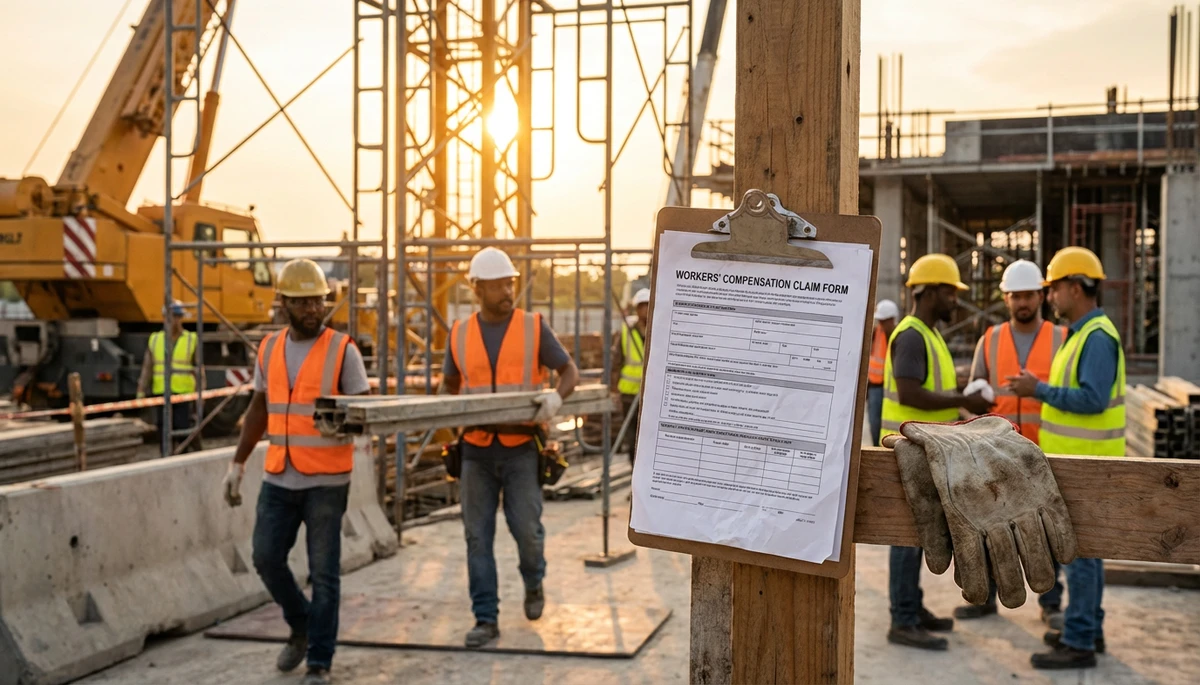
    Injured construction worker reviewing paperwork with legal documents on a table

    Understanding the difference between workers’ comp and a personal injury claim can mean tens of thousands of dollars in additional recovery.

    Can you file both workers’ comp and a personal injury claim?

    Yes. You can pursue workers’ comp benefits from your employer and a separate personal injury lawsuit against a negligent third party at the same time. These are two independent legal proceedings, and one doesn’t prevent the other.

    There’s an important catch, though. If you receive workers’ comp benefits and then win a third-party personal injury settlement or verdict, your employer’s workers’ comp carrier has a lien on your personal injury recovery. They’re entitled to reimbursement for the benefits they’ve already paid you.

    This is called the workers’ comp subrogation lien, and it’s governed by NCGS 97-10.2. The lien amount can be negotiated, and an experienced attorney can often reduce it significantly — but you need to account for it when evaluating the total value of your two-track recovery.

    A simplified example: you receive $50,000 in workers’ comp benefits for your injury. You then settle a third-party personal injury claim for $200,000. The workers’ comp carrier may have a lien of up to $50,000 against that settlement. Your attorney can negotiate this lien, potentially reducing it — but you won’t walk away with the full $200,000 on top of your $50,000 in comp benefits.

    The subcontractor vs. employee distinction

    One of the most contested issues in construction accident cases is whether the injured worker is an employee or an independent contractor. This distinction determines whether workers’ comp applies and whether employer immunity kicks in.

    General contractors on large projects frequently use subcontractors, who in turn hire their own workers. The chain of employment relationships can be complex:

    • If you’re an employee of a subcontractor, your sub’s workers’ comp covers you. You can’t sue your sub, but you can potentially sue the general contractor, other subs, and other third parties.
    • If you’re classified as an independent contractor, you may not be covered by anyone’s workers’ comp. That means you don’t have the guaranteed benefits of comp, but you also aren’t subject to employer immunity — you may be able to sue the party that hired you directly.
    • If you’re misclassified as an independent contractor when you should be an employee, you may be able to claim workers’ comp benefits and pursue other remedies for the misclassification.

    North Carolina uses a multi-factor test to determine whether someone is an employee or an independent contractor. The key factor is the degree of control the hiring party exercises over how the work is done — not just what work is done, but how, when, and where. If the general contractor controlled the details of your work, you might be considered their employee for workers’ comp purposes, even if you were hired by a subcontractor.

    Steps to take after a construction accident

    1. Get medical treatment immediately. Report your injury to the site supervisor and get to an emergency room or urgent care. Construction injuries can involve internal trauma that isn’t immediately obvious.
    2. Report the injury to your employer in writing. North Carolina requires you to report a work injury to your employer within 30 days to preserve your workers’ comp claim. Do it in writing so there’s no dispute about whether you reported it.
    3. Document everything. Photograph the accident scene, your injuries, the equipment involved, and the conditions that contributed to the accident. Get the names and contact information of any witnesses.
    4. Don’t sign anything from the workers’ comp carrier without legal advice. Insurance adjusters may try to get you to settle quickly or sign releases that limit your recovery.
    5. Talk to a personal injury attorney — not just a workers’ comp attorney. Many lawyers handle workers’ comp but don’t pursue third-party claims. If a third party caused your injury, you need an attorney who will investigate both tracks.

    My construction accident attorney page explains the types of construction injuries we handle and how the claims process works. For general guidance on what to do after any injury, see my guide on what to do after an accident in North Carolina.

    Frequently asked questions

    Can I sue my employer after a construction accident in North Carolina?

    In most cases, no. North Carolina’s exclusive remedy doctrine provides employers with immunity from personal injury lawsuits when they carry workers’ compensation insurance. Your remedy against your employer is limited to workers’ comp benefits. However, if your employer intentionally caused your injury or engaged in certain egregious conduct, narrow exceptions to this immunity may apply.

    What’s the difference in compensation between workers’ comp and a personal injury claim?

    Workers’ comp covers medical bills and pays two-thirds of your lost wages up to a state-set cap. It does not compensate you for pain and suffering, emotional distress, or loss of enjoyment of life. A third-party personal injury claim covers all of these damages and can include full lost wages with no cap. For serious construction injuries, the personal injury claim is often worth several times more than workers’ comp alone.

    Who qualifies as a “third party” I can sue after a construction site injury?

    A third party is anyone other than your direct employer who contributed to your injury. This includes general contractors (if you work for a sub), other subcontractors on the site, property owners, equipment manufacturers, equipment rental companies, and design professionals whose negligence created a hazardous condition. An attorney can investigate the accident to identify all potentially liable third parties.

    What happens to my workers’ comp if I win a third-party personal injury lawsuit?

    Your employer’s workers’ comp carrier has a subrogation lien under NCGS 97-10.2, which means they’re entitled to reimbursement from your personal injury recovery for the comp benefits they already paid. This lien can often be negotiated down by your attorney. You won’t be “double-dipping” — but a skilled attorney can structure the recovery to maximize what you actually take home from both claims combined.

    Injured on a construction site? Don’t settle for workers’ comp alone if a third party caused your accident. I’ll investigate both tracks and fight for every dollar you’re owed.

    Free Consultation
    Call 704-741-9399

    This blog post is for general informational purposes only and does not constitute legal advice. Every case is different, and outcomes depend on the specific facts and circumstances involved. Contact the Law Office of Ryan P. Duffy for a free consultation to discuss your specific situation.
  • Scaffold and fall accidents on NC construction sites: your legal options

    Scaffold and fall accidents on NC construction sites: your legal options

    Scaffold falls kill and seriously injure construction workers across North Carolina every year. If you’ve fallen from a scaffold on a job site, you’re probably dealing with catastrophic injuries — broken bones, spinal cord damage, traumatic brain injuries — and a mountain of medical bills. The good news is that you likely have more legal options than your employer or their insurance company has told you about.

    I’m Ryan Duffy, a personal injury attorney in Belmont, NC who spent years on the insurance defense side before switching to represent injured workers. That experience gave me a clear picture of how construction companies, general contractors, and their insurers try to limit what injured workers recover. I now use that knowledge to help my clients pursue every available source of compensation after a scaffold accident.

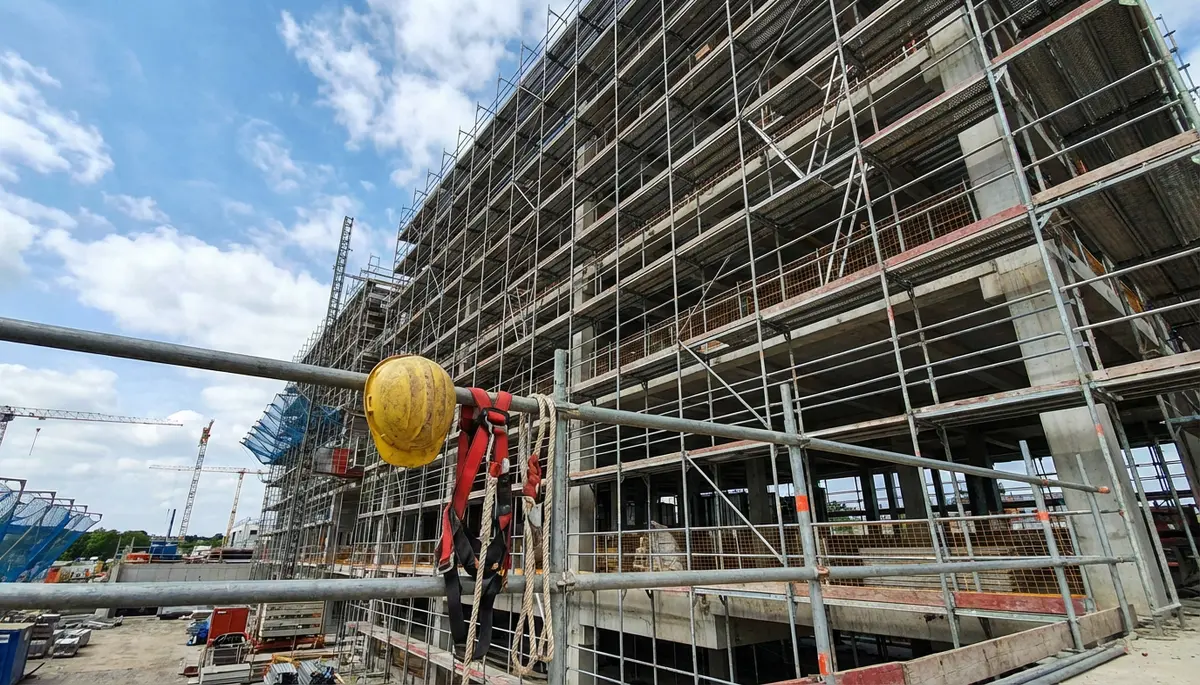
    Construction scaffold on a building site in North Carolina where fall accidents commonly occur

    Scaffold falls remain one of OSHA’s “Fatal Four” — the leading causes of construction worker deaths nationwide.

    Why scaffold accidents are so dangerous

    Falls are the number one cause of death in construction, and scaffolds are involved in a significant percentage of those fatalities. According to OSHA, about 65% of the construction industry works on scaffolds at some point. The heights involved — often 10, 20, or even 50+ feet — mean that scaffold falls almost always result in severe injuries.

    Common injuries from scaffold falls include:

    • Traumatic brain injuries (TBI)
    • Spinal cord injuries and paralysis
    • Multiple fractures — legs, arms, pelvis, ribs
    • Internal organ damage
    • Crush injuries from falling scaffold components
    • Death

    These aren’t the kind of injuries where you miss a few weeks of work and bounce back. Many scaffold fall victims face months or years of recovery, permanent disability, and the inability to return to construction work — or any physical work — ever again.

    OSHA scaffold safety standards

    The federal Occupational Safety and Health Administration (OSHA) has detailed regulations for scaffold safety, found in 29 CFR 1926, Subpart L. These regulations aren’t suggestions. They’re legally binding requirements, and violations are strong evidence of negligence in a personal injury case.

    Key OSHA scaffold requirements include:

    Guardrails

    Every scaffold platform more than 10 feet above a lower level must have guardrails. The top rail must be between 38 and 45 inches high, and there must be a midrail and toeboard. Missing or improperly installed guardrails are one of the most common OSHA violations in scaffold accidents.

    Planking and platform integrity

    Scaffold platforms must be fully planked — no gaps wider than 1 inch between planks except at the edges. Planks must be scaffold-grade lumber or manufactured scaffold platforms rated for the expected load. Damaged, warped, or undersized planking is a setup for disaster.

    Safe access

    Workers need a safe way to get on and off the scaffold — ladders, stair towers, ramps, or other approved access methods. Climbing cross-braces is specifically prohibited by OSHA, but it happens on job sites every day.

    Competent person inspections

    OSHA requires a “competent person” to inspect the scaffold before each work shift and after any event that could affect its structural integrity. That competent person must have the training and authority to identify and correct hazards. On many NC job sites, this requirement gets ignored or treated as a formality.

    Training

    Every worker who uses a scaffold must receive training on the specific type of scaffold they’ll be working on, including how to recognize hazards and what to do about them. Workers who erect or dismantle scaffolds need even more specialized training.

    Common scaffold safety violations in North Carolina

    In my experience handling construction accident cases in NC, the most frequent scaffold violations I see include:

    • No guardrails or incomplete guardrail systems
    • Scaffold erected on unstable ground or without proper base plates and mudsills
    • Planks that don’t extend far enough past the support points
    • Workers not provided with fall protection (harnesses) when working on certain scaffold types
    • No competent person inspections
    • Overloading the scaffold beyond its rated capacity
    • Using damaged scaffold components
    • Failure to provide proper access — forcing workers to climb bracing or frames

    When any of these violations contribute to a fall, the party responsible for the violation can be held liable for the worker’s injuries.

    Ryan’s Insider Perspective

    From my time on the defense side, I know that construction companies and their insurers often try to blame the injured worker: “He should have known the scaffold was unsafe” or “He wasn’t wearing his harness.” Don’t fall for it. The law puts the primary responsibility for scaffold safety on the employer, the general contractor, and the scaffold erector — not the individual worker. When I investigate a scaffold fall, the first thing I look at is who was responsible for erecting, inspecting, and maintaining that scaffold, because that’s where liability usually lives.

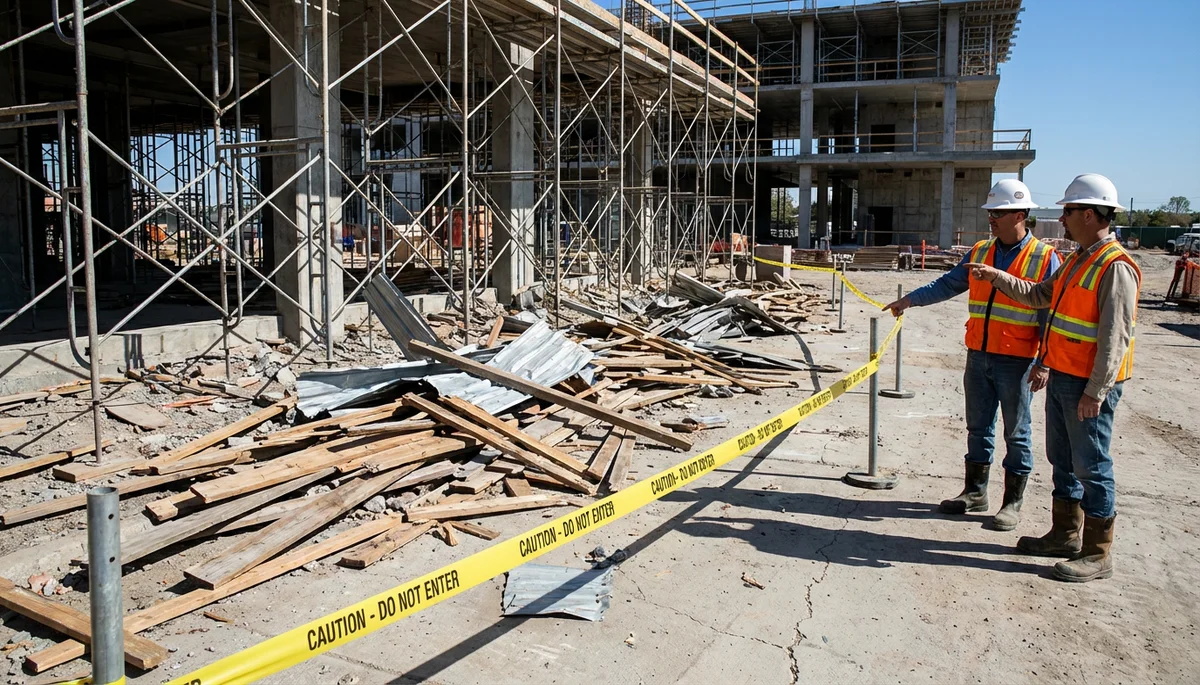
    Fallen construction materials and debris near scaffolding with caution tape and safety workers investigating, representing scaffold collapse accidents

    Proper fall protection, guardrails, and trained inspections can prevent most scaffold accidents.

    Workers’ compensation vs. personal injury claims: the dual-track approach

    Here’s where scaffold fall cases get more complicated — and where having the right attorney matters most. Most injured construction workers know about workers’ compensation. But many don’t realize they may also have a separate personal injury claim against a third party.

    Workers’ compensation

    If you’re an employee (not an independent contractor), you’re entitled to workers’ comp benefits regardless of who was at fault. Workers’ comp covers medical treatment and a portion of your lost wages (typically two-thirds of your average weekly wage, subject to a statutory cap). It does not cover pain and suffering, and the wage replacement is often far less than what you actually earned.

    Workers’ comp is a no-fault system, meaning you don’t have to prove your employer was negligent. But there’s a trade-off: you generally can’t sue your direct employer for additional damages beyond what workers’ comp provides.

    Third-party personal injury claims

    This is where the real money is. While you can’t sue your own employer, you absolutely can sue other parties whose negligence contributed to your scaffold fall. These third parties can include:

    • The general contractor who had overall control of the job site and failed to enforce safety standards
    • The scaffold manufacturer if a defective scaffold component contributed to the fall
    • The scaffold erector if a different subcontractor set up the scaffold improperly
    • The property owner in some circumstances
    • The scaffold rental company if they provided defective equipment

    A third-party personal injury claim allows you to recover full compensatory damages — all of your medical bills, all of your lost wages (not just two-thirds), pain and suffering, disability, and loss of enjoyment of life. These claims are often worth significantly more than workers’ comp alone.

    And here’s the key: you can pursue both tracks simultaneously. You collect workers’ comp benefits while your personal injury claim against the third party is pending. If you win the personal injury case, there may be a workers’ comp lien to address, but the net recovery is almost always higher than workers’ comp alone.

    Product liability claims against scaffold manufacturers

    Sometimes the scaffold itself is the problem. If a scaffold component fails — a locking mechanism breaks, a platform collapses, a coupler gives way — the manufacturer of that component may be liable under North Carolina product liability law.

    Product liability claims can be based on:

    • A design defect — the scaffold was inherently unsafe even when used as intended
    • A manufacturing defect — a specific component was flawed due to a production error
    • A failure to warn — the manufacturer didn’t provide adequate warnings or instructions about the product’s limitations

    These claims require technical evidence, often involving engineering experts who can examine the failed component and testify about what went wrong. Preserving the scaffold components after an accident is critical — if the evidence gets disposed of or returned to service, it becomes much harder to prove a product defect.

    What to do after a scaffold fall accident

    If you or a coworker has been injured in a scaffold fall on an NC construction site, take these steps as soon as possible:

    1. Get medical treatment immediately. Scaffold fall injuries are serious. Don’t let anyone on the job site talk you out of going to the ER.
    2. Report the injury to your employer. This starts the workers’ comp process and creates an official record.
    3. Document the scene. If you’re able, take photos of the scaffold, the area where you fell, any missing safety equipment, and your injuries. If you can’t, ask a trusted coworker to do it.
    4. Don’t give detailed statements to anyone other than medical personnel until you’ve spoken with an attorney. The general contractor and their insurer will start investigating quickly — and their goal is to minimize liability, not to help you.
    5. Contact an attorney who handles construction accident cases. The sooner you have legal representation, the sooner someone can preserve evidence, identify all liable parties, and protect your rights. If you were injured on a construction site in the Belmont, Charlotte, or greater Gaston County area, reach out to my office for a free consultation.

    Contributory negligence in scaffold fall cases

    North Carolina is one of the few states that still follows the contributory negligence rule. This means that if you were even 1% at fault for your accident, the defendant can argue that you’re barred from recovering anything.

    In scaffold fall cases, defendants will try to argue that the worker was careless — not wearing a harness, ignoring safety rules, or working on a scaffold they knew was unsafe. An experienced construction accident attorney knows how to counter these arguments. The reality is that employers and general contractors have a duty to provide safe working conditions, and workers shouldn’t be blamed for hazards they didn’t create and couldn’t control.

    Frequently asked questions

    Can I sue my employer if I fell from a scaffold at work?

    Generally, no. North Carolina’s workers’ compensation law provides the exclusive remedy against your direct employer. But you can sue third parties — like the general contractor, scaffold manufacturer, scaffold erector, or property owner — whose negligence caused or contributed to your fall. These third-party claims often result in significantly higher compensation than workers’ comp alone.

    What if I’m an independent contractor, not an employee?

    If you’re a true independent contractor, you may not be covered by workers’ compensation. The upside is that you’re also not limited by the workers’ comp exclusive remedy — meaning you may be able to sue the hiring company directly, as well as other third parties. Be aware that many construction companies misclassify employees as independent contractors. An attorney can help you determine your actual legal status.

    How long do I have to file a scaffold fall injury claim in NC?

    For a personal injury claim, the statute of limitations in North Carolina is generally three years from the date of injury. For workers’ compensation, you must report the injury to your employer within 30 days, and file a claim with the NC Industrial Commission within two years. Don’t wait — evidence deteriorates, witnesses forget details, and scaffold components get discarded or put back into service.

    What kind of compensation can I recover after a scaffold fall?

    Through workers’ comp, you can recover medical expenses and partial wage replacement. Through a third-party personal injury claim, you can recover full medical expenses, full lost wages (past and future), pain and suffering, disability, loss of enjoyment of life, and in some cases punitive damages. The combined recovery from both tracks is almost always greater than either one alone.

    Hurt in a scaffold fall? I’ll investigate every angle and fight for the full compensation you deserve.

    Free Consultation
    Call 704-741-9399

    This blog post is for general informational purposes only and does not constitute legal advice. Every case is different, and outcomes depend on the specific facts and circumstances involved. Contact the Law Office of Ryan P. Duffy for a free consultation to discuss your specific situation.
  • OSHA Violations and Your Construction Injury Claim: What You Need to Know

    OSHA Violations and Your Construction Injury Claim: What You Need to Know

    If you were hurt on a construction site where OSHA violations existed, you might think your injury case is a slam dunk. An OSHA citation proves the site was unsafe, right? It’s strong evidence, yes. But it doesn’t automatically win your case — and understanding why that distinction matters could make or break your claim.

    I’m Ryan Duffy, a personal injury attorney in Belmont, NC. Before I started representing injured workers, I spent years as an insurance defense attorney. I’ve been on the other side of these cases. I’ve seen how defense teams try to minimize OSHA violations, and I know what it takes to use them effectively in a construction injury lawsuit.

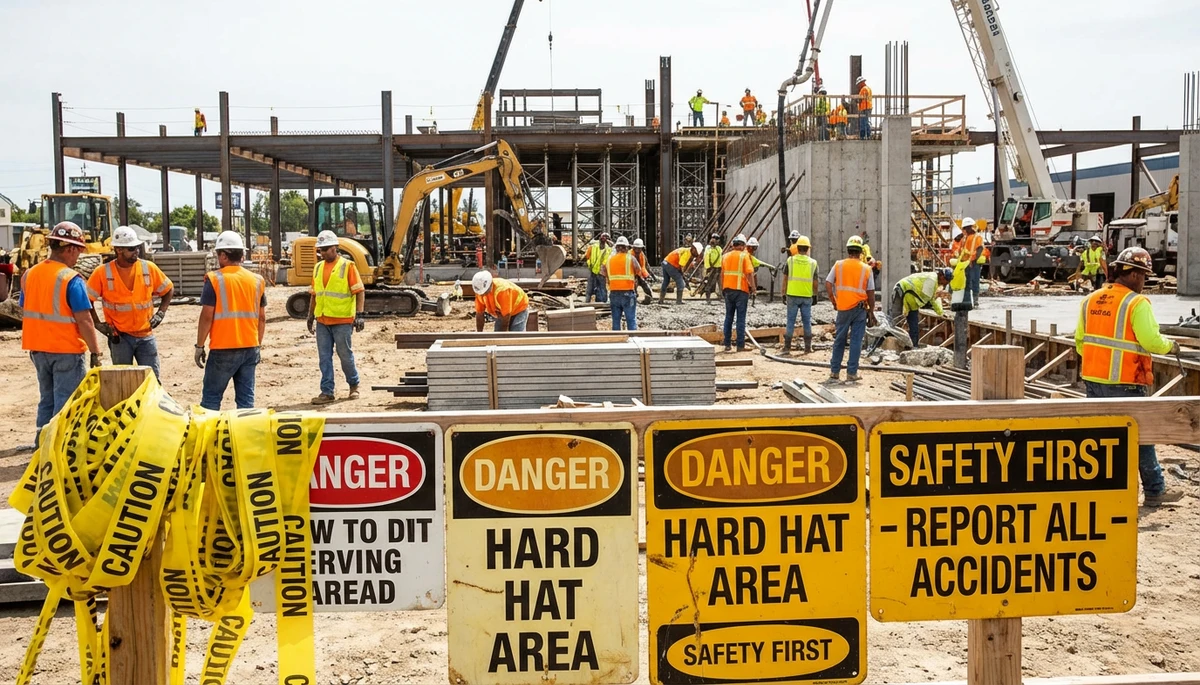
    Construction site with safety violation warning signs and scaffolding

    OSHA violations at a construction site can be powerful evidence in your injury claim — but they’re not the whole story.

    What OSHA does and doesn’t do

    OSHA — the Occupational Safety and Health Administration — sets and enforces workplace safety standards. When OSHA investigates a construction site and finds a violation, it issues a citation. That citation might come with fines, required corrective actions, and a detailed report about what was wrong.

    What OSHA does not do is award money to injured workers. OSHA citations are regulatory actions — they punish the employer for violating safety rules. They don’t, on their own, establish that the employer is liable for your injuries in a civil lawsuit. Those are two separate legal tracks.

    That said, the findings from an OSHA investigation can become some of the most compelling evidence in your personal injury case. The key is understanding how to use them.

    How OSHA violations connect to your injury claim

    In North Carolina, to win a construction accident injury claim, you need to prove that someone was negligent — that they failed to act with reasonable care, and that failure caused your injuries. OSHA violations can support that negligence argument in several ways.

    The per se negligence argument

    In many jurisdictions, violating a safety regulation can establish what’s called “negligence per se.” The idea is straightforward: if a law or regulation exists to protect people like you from the exact type of harm you suffered, then violating that regulation is automatically negligent. You don’t need to prove the defendant “should have known better” — the violation itself is the proof.

    North Carolina courts have recognized this principle in various contexts. If OSHA’s fall protection standard (29 CFR 1926.501) requires guardrails on elevated work surfaces, and your employer didn’t install them, and you fell — that violation is strong evidence of negligence. The regulation existed to prevent exactly what happened to you.

    Evidence of the standard of care

    Even when per se negligence doesn’t apply directly, OSHA standards establish what a reasonable construction company should be doing. If OSHA says trenches deeper than five feet need shoring, that’s the industry standard. A company that ignores that standard is going to have a hard time arguing it acted reasonably.

    I use OSHA standards to frame the question for juries: here’s what the federal government says is the minimum level of safety required. The defendant didn’t even meet the minimum. That’s a powerful argument.

    Documented proof from a government investigation

    An OSHA investigation report isn’t just someone’s opinion. It’s a government inspector’s documented findings, often including photographs, measurements, witness interviews, and detailed descriptions of what was wrong. That kind of evidence carries weight with juries. It’s harder for a defendant to dismiss a government agency’s findings than to argue against an expert witness they claim is biased.

    Ryan’s Insider Perspective

    When I was on the defense side, OSHA citations were the evidence we hated seeing most. We’d argue they were “just regulatory” and “not admissible to prove negligence,” but the reality is that a documented government finding that the site was unsafe is devastating for a defendant. Now that I represent injured workers, I make sure we get those records into evidence.

    The most common OSHA violations on construction sites

    OSHA publishes its most frequently cited violations every year, and construction consistently dominates the list. Here are the violations I see most often in injury cases:

    Fall protection (29 CFR 1926.501)

    This is the number one most cited OSHA violation year after year. The standard requires fall protection — guardrails, safety nets, or personal fall arrest systems — for workers at heights of six feet or more in construction. Falls are the leading cause of death in the construction industry, and the lack of proper fall protection is almost always at the center of those tragedies.

    Scaffolding (29 CFR 1926.451)

    Scaffold-related violations include improper construction, missing guardrails, inadequate planking, and failure to inspect scaffolding before each use. Workers fall from improperly built scaffolds regularly, and these injuries tend to be severe — broken bones, spinal cord damage, traumatic brain injuries.

    Trenching and excavation (29 CFR 1926.651)

    Trench collapses kill workers quickly and with little warning. OSHA requires protective systems — sloping, shoring, or trench boxes — for excavations five feet deep or more. Despite this, contractors routinely skip these protections because they cost money and slow down the job. The result is workers being buried alive in preventable collapses.

    Ladders (29 CFR 1926.1053)

    Ladder violations include using damaged ladders, improper setup, failure to extend ladders three feet above the landing surface, and not securing ladders against displacement. These might sound like minor issues until someone falls twenty feet because a ladder shifted.

    Hazard communication (29 CFR 1926.59)

    Construction workers are exposed to hazardous chemicals — solvents, adhesives, silica dust, lead paint — and OSHA requires employers to train workers about those hazards and provide safety data sheets. When workers are injured by chemical exposure they weren’t warned about, this violation becomes central to the case.

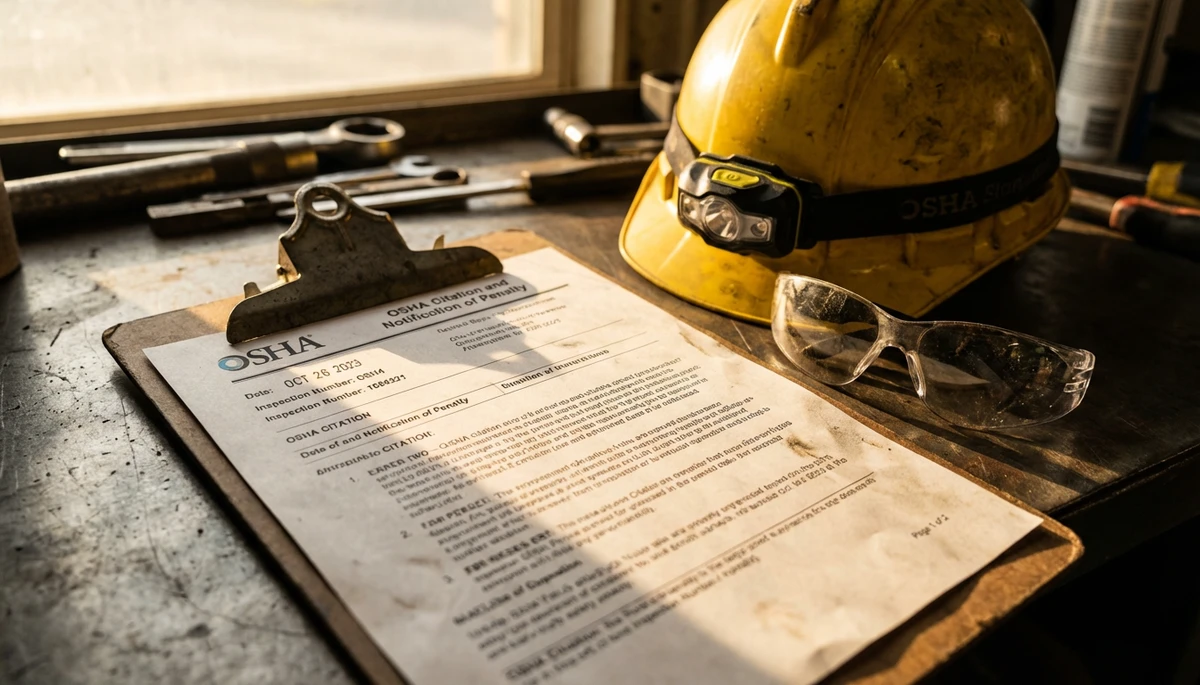
    OSHA inspection report documents and safety violation records

    OSHA investigation records include detailed findings that can become critical evidence in your injury case.

    How to obtain OSHA investigation records

    If OSHA investigated the site where you were injured, you can request copies of the investigation records. There are a few ways to do this:

    File a FOIA request. Under the Freedom of Information Act, you can request OSHA investigation files from the U.S. Department of Labor. This includes inspection reports, citations, photographs, witness statements, and the employer’s response. FOIA requests can take weeks or months, so it’s important to file early.

    Check OSHA’s online database. OSHA maintains a searchable database of inspections and citations at osha.gov. You can search by employer name, location, or SIC code. The online records won’t include everything from the investigation file, but they’ll tell you whether a citation was issued and for what violations.

    Request records through your attorney. An experienced construction accident attorney will know how to obtain OSHA records efficiently and may already have working relationships with the local OSHA area office. Your attorney can also subpoena records during litigation if needed.

    One important note: if OSHA hasn’t investigated your job site injury, you can file a complaint with OSHA yourself. You have the right to report unsafe working conditions, and your employer cannot legally retaliate against you for doing so.

    Why OSHA violations don’t automatically win your case

    I want to be honest about the limitations. An OSHA citation, by itself, isn’t a guaranteed verdict in your favor. Here’s why:

    Causation still matters. You need to prove that the OSHA violation actually caused your injury. If the site had a fall protection violation but you were hurt by a falling object, the fall protection citation doesn’t directly help your case. The violation has to be connected to your specific injury.

    Defendants will fight admissibility. Defense attorneys routinely argue that OSHA citations shouldn’t be admitted into evidence in civil cases. They’ll claim the citation is hearsay, that it’s unduly prejudicial, or that the OSHA standards don’t apply to the specific situation. A skilled plaintiff’s attorney needs to be prepared for these challenges.

    NC’s contributory negligence rule. North Carolina is one of only a few states that follows pure contributory negligence. If the defense can prove you were even slightly at fault for your own injury, you could be barred from any recovery. Even with an OSHA violation on your side, the defense will look for any way to shift blame to you.

    Workers’ compensation complications. If you were an employee of the company that committed the OSHA violation, workers’ comp may be your exclusive remedy against that employer. However, you may still have a third-party claim against other contractors, site owners, or equipment manufacturers — and OSHA violations can be powerful evidence in those claims.

    Who you can sue after a construction site injury

    Construction sites involve multiple parties, and the OSHA violation might point to negligence by someone other than your direct employer. Potential defendants in a construction injury case include:

    The general contractor, who has overall responsibility for site safety. If the GC failed to enforce OSHA standards across the site, they may be liable for your injuries — even if you worked for a subcontractor.

    The property owner, who may have a duty to ensure the site is safe for workers. Property owners who hire contractors to perform construction work can be held responsible if they knew about unsafe conditions and failed to address them.

    Other subcontractors whose negligence contributed to your injury. If another sub’s crew created a hazard — removed guardrails, left an excavation unshored — and you were injured as a result, that subcontractor may be liable.

    Equipment manufacturers, if defective tools, machinery, or safety equipment contributed to your injury. A product liability claim doesn’t require proving negligence — just that the product was defective and caused harm.

    What to do if you’ve been hurt on a construction site with OSHA violations

    Time matters in these cases. OSHA records can be harder to obtain as time passes, witnesses’ memories fade, and evidence at the construction site will change as work continues. Here’s what I recommend:

    Report the injury immediately — to your employer, to the general contractor, and to OSHA if the violation hasn’t been reported yet.

    Get medical treatment and follow your doctor’s instructions. Your medical records create a documented connection between the accident and your injuries.

    Document everything. Take photos of the site, the hazardous condition, any safety equipment (or lack of it), and your injuries. Write down the names of witnesses, supervisors, and anyone who was present.

    Don’t give a recorded statement to any insurance company without talking to an attorney first. The defense will be looking for anything to use against you.

    Contact a construction accident attorney who understands both OSHA regulations and North Carolina personal injury law. These cases are too complex to handle alone.

    Frequently asked questions

    Can I sue my employer for an OSHA violation?

    If you’re an employee, workers’ compensation is generally your exclusive remedy against your direct employer in North Carolina, regardless of OSHA violations. However, you may have a third-party claim against the general contractor, property owner, other subcontractors, or equipment manufacturers. An attorney can evaluate who is potentially liable in your specific case.

    How long do I have to file a construction injury lawsuit in NC?

    North Carolina’s statute of limitations for personal injury is generally three years from the date of injury. But don’t wait that long. Evidence disappears, OSHA records become harder to obtain, and the construction site will continue to change. The sooner you take action, the stronger your case will be.

    Will OSHA investigate my construction accident automatically?

    OSHA investigates workplace fatalities, hospitalizations, amputations, and losses of an eye. For other injuries, OSHA may investigate if a complaint is filed. If OSHA hasn’t investigated your accident, you or your attorney can file a complaint to trigger an inspection. You’re protected from employer retaliation for filing an OSHA complaint.

    Does the OSHA fine amount matter for my injury case?

    The fine itself doesn’t directly determine your damages. However, the severity of the citation — whether it’s classified as “serious,” “willful,” or “repeat” — can be relevant. A willful violation, where OSHA found the employer intentionally disregarded the standard, is especially powerful evidence for your case and may support a claim for punitive damages.

    Hurt on a construction site? Let’s talk.

    I’ve handled construction injury cases from both sides. I know how the defense will use — and try to minimize — OSHA violations. Let me put that experience to work for you.

    Get a free case review

    Or call (704) 741-9399

    The information on this page is for general informational purposes only and does not constitute legal advice. Every case is different. Contacting Ryan P. Duffy Law does not create an attorney-client relationship. Past results do not guarantee future outcomes.